Great feast
Monday of the Holy Spirit
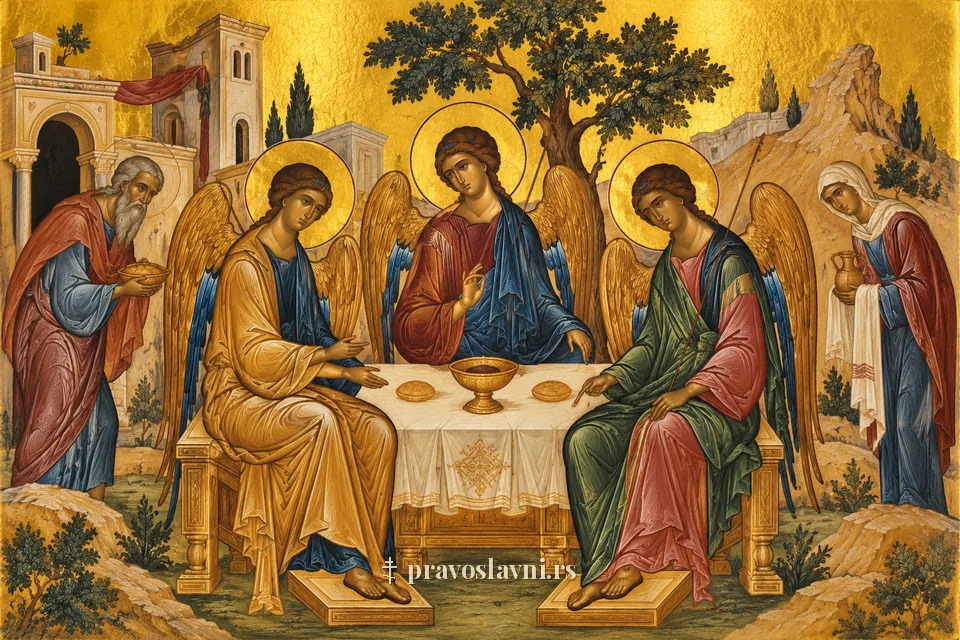
What happenedThe Monday of the Holy Spirit, the day after Pentecost, is dedicated to the Holy Spirit, the third Person of the Holy Trinity, Who is worshipped together with the Father and the Son.
Read the LifeOrthodox Calendar · 19 May according to the Julian calendar
Monday, 1 June 202619 May (according to the Julian calendar)What happenedThe Monday of the Holy Spirit, the day after Pentecost, is dedicated to the Holy Spirit, the third Person of the Holy Trinity, Who is worshipped together with the Father and the Son.
Read the Life
You may eat meat, eggs, milk and dairy products, as well as any other food — but try to be moderate.
More about the fast →
Red Letter day — great feast; by custom, no work is done
More about the feast →
“For the fruit of the Spirit is in all goodness, righteousness, and truth.”
— Eph 5:9By the custom of Duhovi (Pentecost, Holy Trinity Day), on the feast of the Descent of the Holy Spirit grass and flowers are brought into the church, and little wreaths are woven from them. In the calendar the Monday of the Holy Spirit is a Red Letter day (great feast) and a non-fasting day. The whole week after Duhovi remains festal, so there is no fasting even on Wednesday and Friday, and the festal joy of Duhovi, by custom, continues on the Monday as well.
The Monday of the Holy Spirit received its name because, according to the “Liturgics” handbook, it is dedicated to the Holy Spirit. The Spirit, Life-giving and Almighty, is the third Person of the Holy Trinity and is honoured equally with the Father and the Son. And so, on the day after the feast of the Descent of the Holy Spirit, the Church glorifies the Holy Spirit Himself.
The service begins on Sunday evening with Small Vespers and the canon to the Holy Spirit, because Great Vespers has already been served after the festal Divine Liturgy. At Matins the Great Doxology is sung, and at the Liturgy, in place of the antiphons, the Beatitudes are sung with special hymns.
Christ promised His disciples power when the Holy Spirit came upon them, and at Pentecost “they were all filled with the Holy Spirit”. The day is a Red Letter day (great feast) and there is no fasting. The day of Pentecost is regarded as the birthday of the Church of Christ. The feast of Pentecost is celebrated for the whole week, and so neither Wednesday nor Friday is a fasting day then.
The day after Pentecost, according to the Liturgics, bears the name Monday of the Holy Spirit, “because it is dedicated to the All-holy, Life-giving and Almighty Spirit”. The Holy Spirit is the third Person of the Holy Trinity and receives the same worship as the Father and the Son. Since His descent on the apostles and the Holy Trinity were glorified on Sunday, on Monday the Church addresses her praise to Him in particular. The calendar marks this day as a Red Letter day (great feast) and as a day with no fasting.
The service of the Monday of the Holy Spirit begins already on Sunday evening. Great Vespers was served immediately after the festal Liturgy, so in the evening only a short Small Vespers is served, with the canon to the Holy Spirit, to whom the Monday itself is dedicated. At Matins the Great Doxology is sung, although there is no Polyeleos. On that day the antiphons at the Liturgy are replaced by the Beatitudes, with which special hymns are sung.
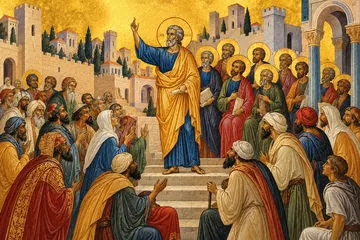
Before the Ascension Christ said to the disciples: “But you shall receive power when the Holy Spirit has come upon you” (Acts 1:8). At Pentecost this was fulfilled: “And they were all filled with the Holy Spirit and began to speak with other tongues, as the Spirit gave them utterance” (Acts 2:4).
The story of Pentecost begins on Zion, where the apostles waited in prayer for the Comforter; then tongues of fire come down upon them, they preach in unknown languages, and three thousand people receive baptism. The day of Pentecost is regarded as the birthday of the Church of Christ.
The feast, however, does not last only one day. According to the Liturgics, “The feast of Pentecost is then celebrated for the whole week, and therefore the fast is relaxed on Wednesday and Friday”. The Monday of the Holy Spirit is thus the second day of the festal week in which the Church rejoices in the descent of the Holy Spirit and glorifies Him Himself.
St Patrick, Bishop of Prusa, suffered, according to the Prologue, in the time of the Emperor Julian the Apostate, together with three presbyters: Acacius, Menander and Polyaenus. His Life says that he preached Christ openly and converted many idolaters, and so the pagans seized him and handed him over to the governor.
The governor led the chained prisoners to the hot springs, where, according to his Life, he offered sacrifices to Asclepius and the goddess Soteria and demanded that the bishop too should bow down to them. To the governor's question about the hot waters the bishop answered that Christ had created them, and that the idols which the governor worshipped were demons. According to his Life, he also spoke of the fire under the earth which heats the springs, and of hell as the eternal torment of the godless.
When asked whether Christ would save him if he were thrown into the boiling water, he answered that he gave himself up to the will of God. He was thrown into the water and remained unharmed, glorifying Christ, while the drops scalded many of those who were standing around him. The enraged governor ordered that the bishop and the presbyters be put to death. Before their death they prayed, and his Life records Patrick's words: “Lord Jesus Christ, help me, Thy servant!”
His Life sees all four of them in the glory of the saints, and Patrick as a victor whom Christ has crowned. His example teaches that a confessor of Christ does not seek his own life, but the will of God.