Saint of the day
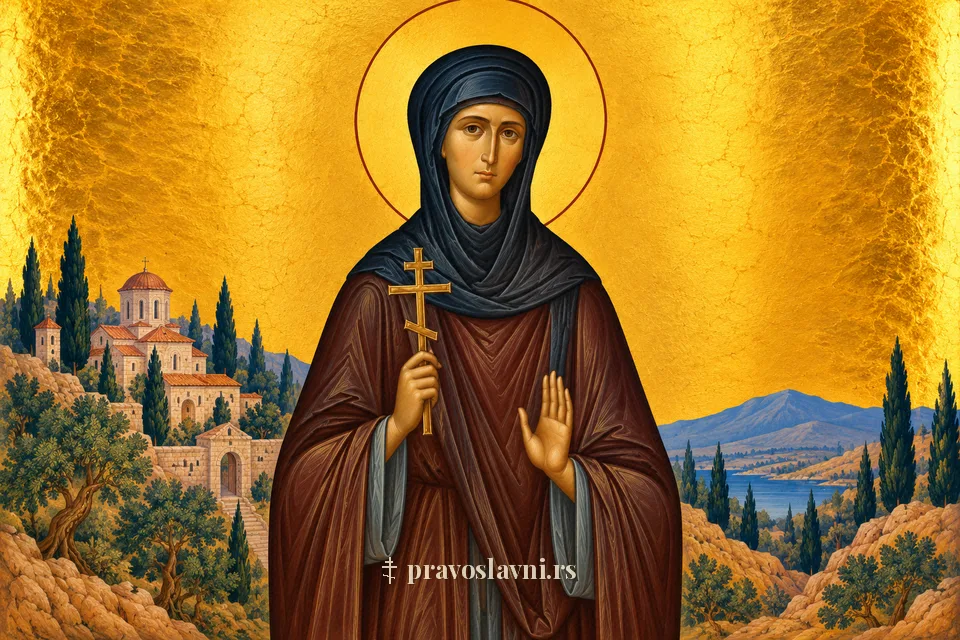
Venerable Macrina
What happenedVenerable Macrina, the eldest sister of Basil the Great and Gregory of Nyssa, remained faithful to her betrothed after his death and dedicated her life to God.
Read the LifeOrthodox Calendar · 19 July according to the Julian calendar
Saturday, 1 August 202619 July (according to the Julian calendar)Save your slava — you'll get a reminder a week and a day before.
Send a greeting card →What happenedVenerable Macrina, the eldest sister of Basil the Great and Gregory of Nyssa, remained faithful to her betrothed after his death and dedicated her life to God.
Read the Life
You may eat meat, eggs, milk and dairy products, as well as any other food — but try to be moderate.
More about the fast →
Many families celebrate their Krsna slava (family patron saint's day) today
More about the feast →
“That your charitable deed may be in secret; and your Father who sees in secret will Himself reward you openly.”
— Mt 6:4St Gregory of Nyssa found his sister on her deathbed when he came to her. Even then, according to her Life, she was living in extreme poverty, and yet she showed her brother honour with a bow and hid how ill she was, so that he should not grieve. They talked about the meaning of life and about eternity. The Prologue says that before her death she prayed, made the sign of the Cross over her forehead, eyes, face and heart, and reposed in the year 379.
She was the eldest sister of Basil the Great and Gregory of Nyssa, and came from Cappadocia. According to her Life, at her birth she was named Thecla, after a revelation which her mother had in a dream, but at home they called her Macrina, after her grandmother, St Macrina.
She was betrothed when she was young, but her betrothed soon died. She believed that he was alive in God and that she owed him faithfulness even after death, and so she did not marry. According to her Life, after her father's death she ran the household, brought up her younger brothers and sisters, and by her words turned her brother Basil towards the monastic life.
Later she herself, together with her mother Emmelia, became a nun in a community of virgins; according to her Life, her mother set the slaves free on her advice, and they lived together, in poverty and prayer. She supported herself, according to the Prologue, with her own hands, and spent her time in prayer and the contemplation of God. When a sore appeared on her breast, she would not allow either a physician or her mother to see it, but prayed with tears; at her request her mother made the sign of the Cross over the sore, which then healed. According to the Prologue, she hid not only the sore but also the healing: modesty led her to the one, humility to the other.
Her Life also remembers that she healed with a kiss a little girl who was blind in one eye, and that in a time of famine the wheat and the bread were multiplied for the poor. She had nothing except the very simplest things. When they were preparing her for burial, they found on her an iron cross and an iron ring with a cross. Above all, her life bears witness to humility.
Macrina was born in Cappadocia, according to her Life in the time of Emperor Constantine the Great. She was the first child of Basil and Emmelia, who, as her Life says, had ten children. Her younger brothers are St Basil the Great and St Gregory of Nyssa.
Before her birth her mother had a revelation in a dream, and so the little girl was given the name Thecla. At home, however, they called her Macrina, after her grandmother, St Macrina, who suffered in the persecution under Maximian Galerius. Her Life sums this up in the words: “Thecla by revelation, Macrina by name.”
Her mother, according to her Life, taught her the Holy Scriptures and not pagan fables: above all the Wisdom of Solomon and the Psalter. From childhood she sang prayers and did handiwork.
Her father, according to her Life, betrothed her at about the age of twelve to a young man from a distinguished family, but her betrothed soon died. Macrina then decided not to marry. She held that her betrothed was alive in God and that faithfulness to him lasts even after death, and so she refused other suitors.
She remained with her mother and served her. Her Life says that after her father's death she ran the household and brought up her younger brothers and sisters, and that to the youngest, Peter, she was like a second mother. Her brother Naucratius went into the wilderness young and died young. When Basil returned from his schooling, Macrina, according to her Life, drew him to the monastic life by her words.
Together with her mother Emmelia, Macrina entered the monastic life, in a community of virgins. According to her Life, on her advice her mother set the slaves free, and they all lived together, in poverty and prayer. She earned her bread, according to the Prologue, with her own hands, and spent her time in prayer and contemplation of God.
Both sources also remember one event from that life. When a sore appeared on her breast, she would not let a physician look at it, nor even her own mother. She prayed with tears and put the tears, mixed with dust, on the sore. At her request her mother made the sign of the cross over the sore, and only a scar remained. According to the Prologue, she hid not only the sore but also the healing: modesty led her to the one, humility to the other.
Her Life, following Gregory, remembers other miracles too: with a kiss she healed a little girl who was blind in one eye, and in a time of famine the wheat and the bread were multiplied for the poor. Gregory says that he does not write down the other miracles, so that the weaker might not waver.
Before her death her mother, according to her Life, laid her hands on Macrina and Peter and dedicated them to God. After her mother, her brother Basil died as well, and Macrina, as her Life records, grieved deeply for him.
Gregory visited her when nine months had passed since Basil's death; according to her Life, he was returning from a council in Antioch. On the way he dreamed of relics of martyrs bathed in light, and he understood this as a sign of his sister's spiritual life. He found her on her deathbed. She lived in such want that she met even her dying hour in utter poverty; yet, according to her Life, she showed her brother honour with a bow. They talked about the meaning of life and about eternity, and she hid her illness in order to spare him sorrow.
Before her death she prayed and signed her forehead, eyes, face and heart with the cross. The Prologue says that she reposed in the year 379. Her Life records that she had nothing except the very simplest things. The nuns Vetiana and Lampadia dressed her for burial and found on her an iron cross and an iron ring with a cross. The people crowded around the coffin, and she was buried in her parents' tomb, beside her mother's relics. Gregory was an eyewitness of her death, and afterwards also her biographer.
The lesson of her life is that humility is worth more than worldly knowledge. Faithfulness, service to her parents and to the poor, prayer and renunciation were her path to God.
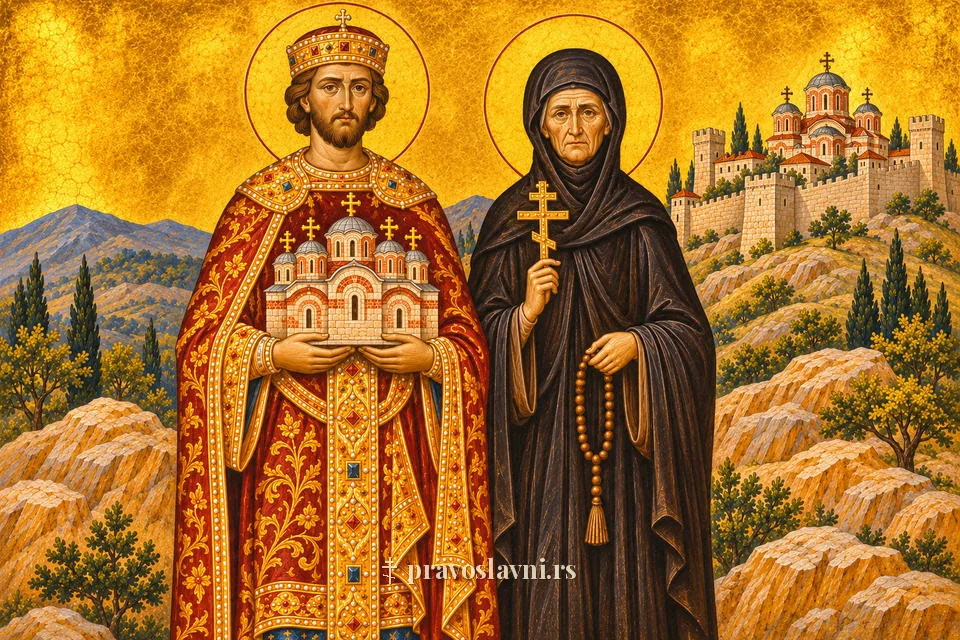
The holy Despot Stefan was the son of the holy Prince Lazar and Princess Milica. His Life, which Konstantin the Philosopher wrote at the request of Patriarch Nikon, says that he was born in Kruševac at the end of 1377 and that he took over the rule at the age of sixteen. According to the Prologue, he defended Christianity in the Balkans at the time when it was hardest for it, and his endowments (zadužbine) are Manasija and Kalenić. According to his Life, together with his mother he restored Dečani, gave gifts to Hilandar and to the Russian Monastery of St Panteleimon, and in Belgrade, his capital, he restored the metropolitan church of the Dormition and built other churches. Konstantin the Philosopher writes of him: “And his work was unceasing almsgiving and the frequent reading of the divine words.” According to the Prologue, he reposed after many troubles and hardships in the year 1427, on 19 July (according to the Julian calendar). Venerable Eugenia is his mother, Princess Milica, who in monasticism bore the name Jevgenija (Eugenia). According to her Life, she was of the Nemanjić line, and after Prince Lazar was killed at Kosovo she governed the land until she handed over the rule to her son. She was tonsured a nun first at Županjevac, and then at Ljubostinja, which she built and dedicated to the Dormition of the Most Holy Theotokos. Together with her sons she translated the relics of Prince Lazar from Priština to Ravanica, and she also reconciled her sons Vuk and Stefan. Before her death she received the Great Schema with the name Jefrosinija (Euphrosyne); she reposed in the year 1405 and was buried at Ljubostinja, where, as her Life records, miracles took place at her tomb.
Separate page: St Stefan, Despot of Serbia (Stefan Lazarević), and Venerable Eugenia →


