Thursday08April 202726 March (according to the Julian calendar)‹›
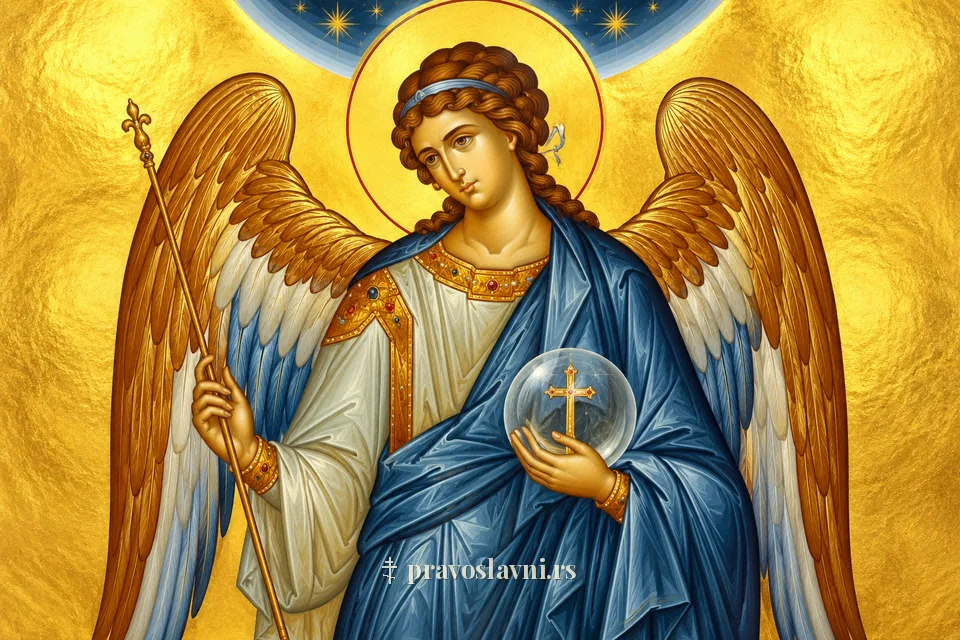
Illustration
Feast of the day
Synaxis of the Archangel Gabriel
What happenedOn the day after the Annunciation the Church celebrates the Archangel Gabriel, the heavenly messenger who brought the Virgin Mary the news of the Incarnation of the Son of God.
“And the angel answered and said to him, ”I am Gabriel, who stands in the presence of God, and was sent to speak to you and bring you these glad tidings.”“
— Lk 1:19
About this day
Synaxis of the Archangel Gabriel
On this day the Church celebrates the Synaxis of the Holy Archangel Gabriel and remembers how many times, from the Old Testament to the Gospel, appearing and working wonders, he took part in the work of salvation. The day after the Annunciation is also dedicated to the Archangel, when his synaxis is likewise celebrated. By folk custom, the Synaxis of the Holy Archangel Gabriel is celebrated as a Krsna slava (family patron saint's day).
According to tradition, the feast was first established on the Holy Mountain in the ninth century.
Why was it Gabriel who was sent to the Virgin Mary in Nazareth? The Life answers that his ministry is to reveal the mysteries of God, and the Incarnation of the Son of God was a mystery so great that it was fitting for it to be announced by one of the highest angels. Michael, according to the Life, was not sent because that was not his ministry.
The Prologue and the Life number him among the seven highest archangels, who stand by the throne of God. The Life puts him in the second place, after Michael. All of them have their own ministry and, according to the Prologue, equal honour: Michael overcomes the enemies of the faith of God, while Gabriel brings the good tidings of salvation. The holy fathers number him in the highest rank, among the seraphim. According to St Dionysius the Areopagite, as the Life cites him, the seven archangels always stand before God and the highest mysteries are entrusted to them.
He is the herald of God's mysteries before the Annunciation as well. The Life records that he revealed to the Prophet Daniel the deliverance of the people from Babylon and the time of the Messiah's coming. To Zacharias he announced the birth of the Forerunner and told him that he stands in the presence of God (Lk 1:19). And in the sixth month he was sent to Nazareth, where he announced to the Virgin that She would give birth to the Son of God (Lk 1:26–38). Some, according to both sources, also hold that he announced to Joachim and Anna the birth of the Virgin. The Life also recalls the words of Scripture about the spirits who are sent forth to minister (Heb 1:14).
His name, according to the Life, means the power of God, or God and man, and foreshadows that the mighty God will become perfect man in the womb of the Virgin. According to the Prologue, the name Gabriel means man – God. St Proclus of Constantinople, as the Life cites him, says that the name itself portrayed Him who was to come.
The Church, as the Life says, dedicates the first day after the Annunciation to the Synaxis of the Archangel Gabriel. The Life compares this feast with the honour that people show to the envoy of their sovereign: Gabriel brought the tidings of salvation, and so the Church honours him with a special feast.
The feast teaches us to honour the herald together with the tidings. The angels stand before God, and they are sent to serve those who are to be saved.
Full Life
Honour to the messenger
His Life records that the Church dedicates the first day after the Annunciation to the Synaxis of the Archangel Gabriel, in order to honour the messenger who announced the Incarnation of God the Word. His Life compares this feast with the honour which people show to the envoy of their ruler: Gabriel brought the news of salvation, and so the Church celebrates him with a special feast.
The Gospel says: “Now in the sixth month the angel Gabriel was sent by God to a city of Galilee named Nazareth” (Lk 1:26). There he announced to the Virgin Mary that she would give birth to the Son of God (Lk 1:26–38). “And having come in, the angel said to her, “Rejoice, highly favored one, the Lord is with you; blessed are you among women!”” (Lk 1:28).
One of the seven
According to the Prologue and his Life, Gabriel belongs to the seven highest archangels, those who stand beside the throne of God. They are Michael, Gabriel, Raphael, Uriel, Selaphiel, Jegudiel and Barachiel; the Prologue adds that some count an eighth as well. His Life puts Gabriel in second place, immediately after Michael.
The Prologue stresses that in honour they are all equal, although the service of each of them is different. Michael defeats the enemies of God's faith, while Gabriel brings the good tidings of salvation. His Life lists the others too: Raphael heals human illnesses, Uriel enlightens those who are in darkness, Selaphiel prays for people, Jegudiel glorifies God and rewards those who labour for His glory, and Barachiel bestows God's blessings.
His Life also cites St Dionysius the Areopagite, according to whom the seven archangels always stand before God and the highest mysteries are entrusted to them. It also recalls the words of Scripture about the seven spirits before the throne of God (Rev 1:4) and about the spirits who are sent forth to minister (Heb 1:14). The holy fathers, according to both sources, place Gabriel in the highest rank, among the seraphim; his Life says — in second place among them.
Servant of the mysteries of God
Why was Gabriel sent to the Virgin, and not Michael? His Life answers that this was not Michael's service, while Gabriel's task is to reveal the mysteries of God. The Incarnation, according to his Life, is so great a mystery that it was fitting for one of the highest angels to announce it; St Andrew of Crete says that God commanded this of one of the highest.
Gabriel had brought God's messages before as well. His Life records that he revealed to the Prophet Daniel the deliverance of God's people from Babylon and the time of the coming of the Messiah. To Zacharias, the father of the Forerunner, he foretold the birth of a son, according to his Life from a barren mother, and said to him: “I am Gabriel, who stands in the presence of God, and was sent to speak to you and bring you these glad tidings.” (Lk 1:19).
Some, as both sources record, hold that he taught the Prophet Moses in the wilderness to write the Book of Genesis; his Life gives this as something that is told. Some also believe that he foretold the birth of the Virgin to Joachim and Anna. His Life adds, as a pious opinion, that he was her guardian angel and that he fed her while she dwelt in the holiest part of the temple.
A name that prophesies
Gabriel's very name carries a message too. According to the Prologue, the name Gabriel means man – God, which the fathers connect with the Son of God as the mighty God. His Life interprets it as the power of God or God and man, and sees in this a sign that the mighty God would become perfect man in the womb of the Virgin. St Proclus of Constantinople, as his Life cites, says that the name itself portrayed in advance the One who was to come. His Life also refers to St John of Damascus, who describes how at the Annunciation the things of heaven rejoiced and the things of earth trembled.
On this day the Church honours the messenger together with the message. Gabriel, the servant of the mysteries of God, brought people the joyful news of salvation. The feast reminds us that the angels stand before God, yet are sent to serve those who are to be saved.
Other saints of the day
Hieromartyr Irenaeus of Sirmium
St Irenaeus, Bishop of Sirmium (Srem), suffered in the year 304, while Maximian was emperor. According to the Prologue, it is thought that he was a Slav by origin, and before he became a bishop he had a wife and children. For that reason his temptation did not come only from the persecutors: those closest to him begged him in tears to abandon the faith and so to spare both himself and them. Irenaeus did not give way. The Prologue stresses that suffering for Christ was dearer to him than anything this world can offer. Because of this steadfastness the governor of the city condemned him to death: he was thrown from a bridge into the Sava, and there he met his end. Thus the Bishop of Srem bore witness that faithfulness to Christ stands above one's kin and above life itself.