Saint of the day
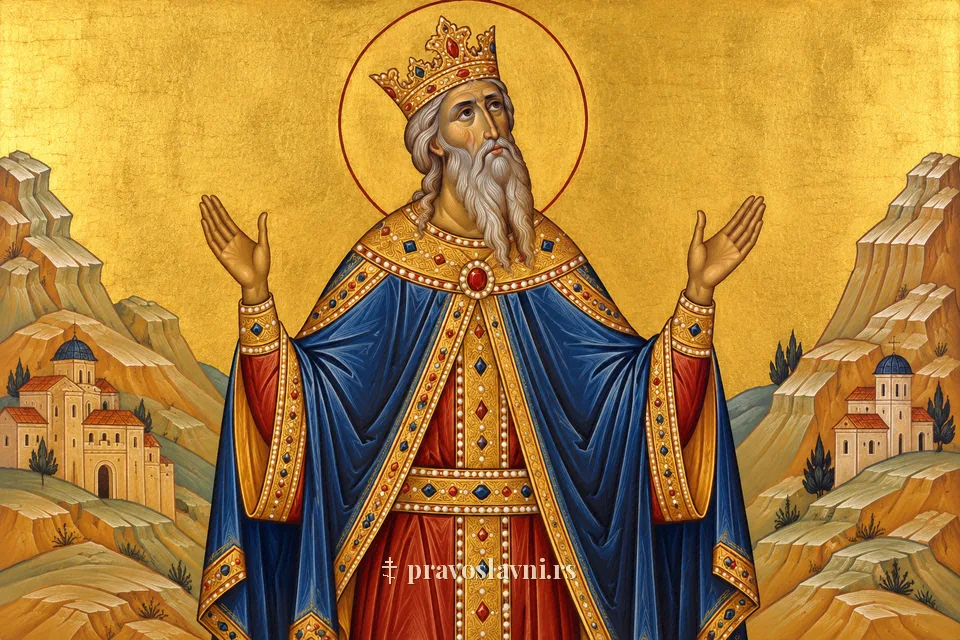
Holy Righteous Job
What happenedThe Righteous Job lost all his possessions and his children in a single day, and then his health as well, yet he did not murmur against God.
Read the LifeOrthodox Calendar · 6 May according to the Julian calendar
Wednesday, 19 May 20276 May (according to the Julian calendar)What happenedThe Righteous Job lost all his possessions and his children in a single day, and then his health as well, yet he did not murmur against God.
Read the Life
No meat, dairy products, eggs or fish — oil and wine are allowed.
This is a recommendation — for your own fast, consult your priest or spiritual father.More about the fast →
Today the Church keeps the commemoration of a saint · not a Red Letter day.
More about the feast →
“For I know that my Redeemer lives, And He shall stand at last on the earth.”
— Job 19:25Righteous Job, from being a very rich man, according to his Life the greatest among the people of the East, became a sick man covered with sores, sitting on a dunghill outside the city.
The Prologue and his Life say that he lived in Arabia and was descended from the family of Abraham; the Prologue places him about two thousand years before Christ and remembers his full name, Jobab, as well as the names of his parents, Zerah and Bozrah. He feared God and lived uprightly, and the Life adds that he shunned evil, that he had seven sons and three daughters, and that he offered a sacrifice for each child, out of fear that it might have sinned in its heart.
God allowed Satan to put Job to the test, because Satan, according to the Life, claimed that Job was devout only on account of his prosperity. According to the Prologue, Job was then seventy-nine years old. In a single day he lost all his possessions and all his children. The Life records that he then bowed down to the ground before God and said: “The Lord gave, and the Lord has taken away; blessed be the name of the Lord.”
Then came the illness, and sores covered his whole body. According to the Life, his wife urged him to curse God and die, and he rebuked her with the question: “Why do you speak as a foolish woman?” His three friends, Eliphaz, Bildad and Zophar, when they came, did not at first recognise him, as the Life says, and then for seven days and seven nights they stayed beside him in silence, because of the greatness of his suffering.
Job did not murmur. He endured to the end. God gave him back his health and multiplied his possessions, and gave him seven sons and three daughters once again. He lived for a long time afterwards and glorified God.
The Prologue and the Life see in Job a prefiguration of the suffering Lord Jesus Christ. His life teaches that loss and illness need not destroy faith: whoever stays with God in trouble is not left without God's comfort.
Both sources say that he lived in Arabia and that he was of Abraham's line; the Prologue places him roughly two thousand years before Christ, traces his descent from Esau, and gives his parents, Zareth and Bosorrah, and his full name, Jobab.
The Prologue and the Life describe him as an upright man who feared God and had great wealth. The Life adds that he was blameless, that he shunned evil and that among the people of the East there was none greater than he. His property, according to the Life, was counted in thousands of head — seven thousand sheep and three thousand camels, with five hundred yoke of oxen and as many female donkeys — and his house was full of servants. He had seven sons and three daughters. The Life also remembers his care for them: for each child separately he offered a sacrifice to God, because he feared that one of them might have sinned against God in their thoughts (Job 1:5).
The Life, following the Book of Job, explains why the righteous man suffered: Satan claimed before the Lord that Job was faithful only as long as God showered him with good things and that a man will give everything just to save his life. The Lord allowed him to test Job, first in his property and then in his body as well, but not to take his life. According to the Prologue, Job was then seventy-nine years old.
Both sources say that in a single day he was left without his property and without his children. According to the Life, his livestock were carried off by raiders and Chaldeans or destroyed by fire from heaven, his servants perished except for one messenger each time, and his children died when a wind from the desert brought down the house in which they were feasting. Then sickness seized his whole body. The one whom the Life calls the greatest among the people of the East was now covered with sores.
At the news of his losses Job, according to the Life, tore his clothes, shaved his head and fell to the ground, worshipped God and said: “The LORD gave, and the LORD has taken away; blessed be the name of the LORD.” The Life stresses that in this he did not sin and that he did not rise up against God with a single word.
His wife, who, according to the Life, urged him to curse God and die, he rebuked with a question: “Why do you speak as a foolish woman speaks?” Three friends, Eliphaz, Bildad and Zophar, came to comfort him. According to the Life, when they caught sight of him, at first they could not recognise him; weeping, torn robes and dust on their heads were their first answer. Because of the greatness of his suffering they sat beside him in silence for seven days and seven nights.
Through all this Job did not murmur against God and he endured to the end.
God healed Job and made him richer than before — the Life says, twice as rich. He again had seven sons and three daughters and he lived for a long time yet, glorifying God.
The Prologue and the Life see in Job a prefiguration of the suffering Lord Jesus Christ.
Job has remained a model of patience: he was left without anything and without his health, yet he did not blame God, and God did not abandon him. To those who are passing through loss and illness he shows that a faith which endures is not left without God's comfort.
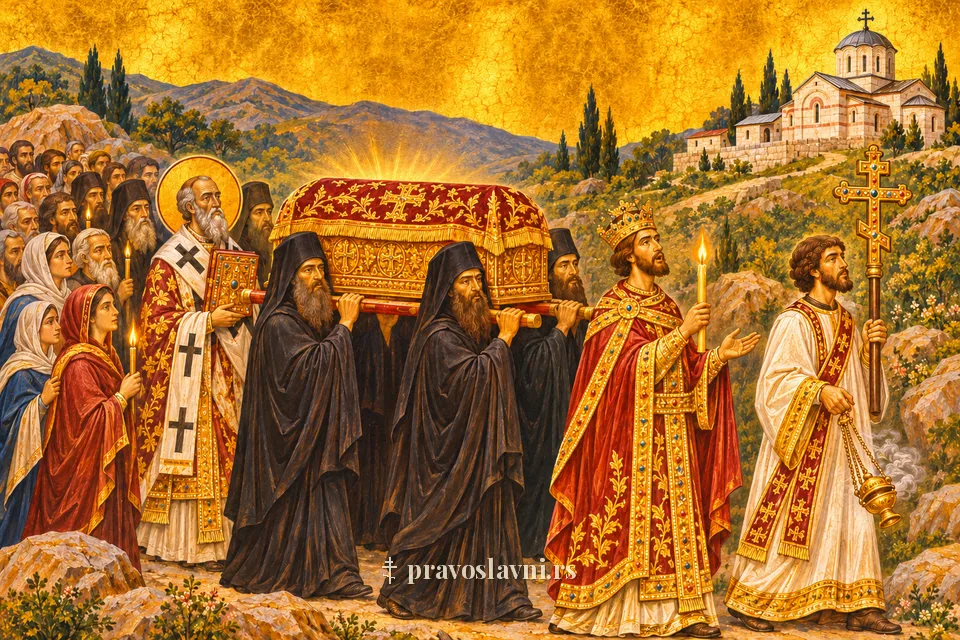
St Sava reposed in the year 1236 and, according to his Life, was buried in Tarnovo, in the church of the Holy Forty Martyrs. A year later Archbishop Arsenije, Sava's successor, urged King Vladislav to bring the relics back to Serbia. The Bulgarian Tsar Asen, Vladislav's father-in-law, turned down the first embassy, pointing to the honour which the relics already had in Tarnovo; nor did he give way after further embassies, because the patriarch and his counsellors were opposed to handing over the relics. Then Vladislav himself went to Tarnovo and first knelt weeping at Sava's tomb, and only then met with Asen. The Life says that Asen saw in a dream an angel in the likeness of Sava, who commanded him to hand over the relics; his patriarch and nobles saw in this a sign from God, and he consented. When the tomb was opened in the year 1237, the body, according to the Life, was found whole and incorrupt, and a sweet fragrance spread through the church. Vladislav did not want to wait, because he was afraid that Asen might go back on his word, and so the procession set out for Serbia at once; the king walked in front of the coffin to the sound of psalms which he sang himself, and along the way many were restored to health. With great celebration the relics were laid in the tomb which Vladislav had prepared in the church of the Ascension in his endowment (zadužbina), Mileševa. The translation was described in detail by Teodosije and Domentijan, and the feast was established by the Serbian Orthodox Church. Persistent and humble prayer overcame the ruler's refusal, and St Sava returned to his people as a source of healing and unity.
Separate page: Translation of the Relics of St Sava of Serbia →