Saint of the day
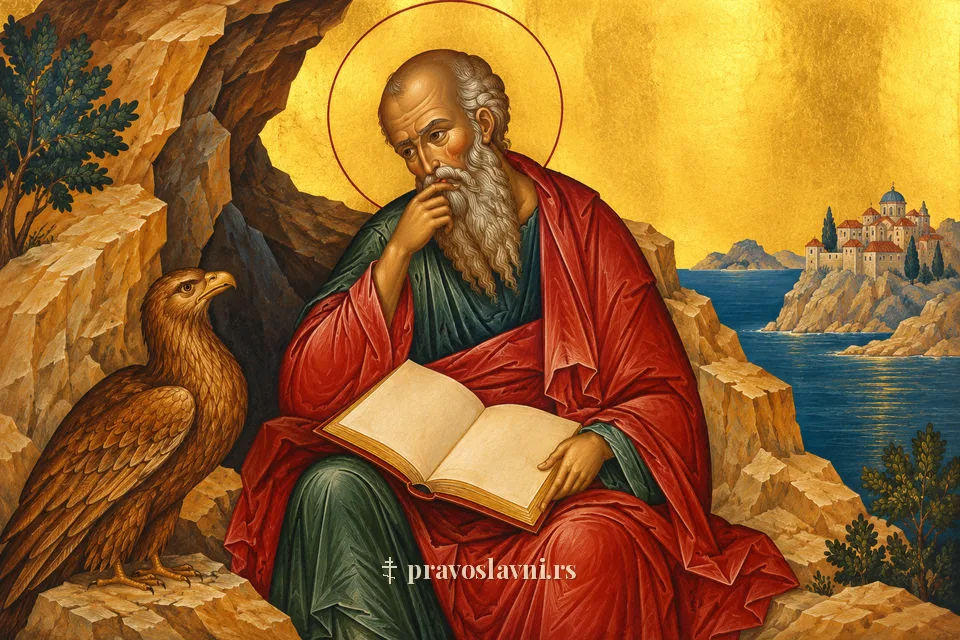
Holy Apostle and Evangelist John the Theologian
What happenedFrom the empty tomb of St John the Theologian near Ephesus a fine dust rose every year, by which the sick were healed.
Read the LifeOrthodox Calendar · 8 May according to the Julian calendar
Friday, 21 May 20278 May (according to the Julian calendar)Save your slava — you'll get a reminder a week and a day before.
Send a greeting card →What happenedFrom the empty tomb of St John the Theologian near Ephesus a fine dust rose every year, by which the sick were healed.
Read the Life
Fish, oil and wine are allowed — no meat, dairy products or eggs.
This is a recommendation — for your own fast, consult your priest or spiritual father.More about the fast →
Many families celebrate their Krsna slava (family patron saint's day) today
More about the feast →
“Beloved, let us love one another, for love is of God; and everyone who loves is born of God and knows God.”
— 1 Jn 4:7Sung at the Slava (family patron saint's feast) and on the saint's feast day.
O Apostle beloved of Christ God, hasten to deliver a defenceless people: He who received thee when thou didst lean upon His breast receiveth thee as thou fallest down before Him. Entreat Him, O Theologian, to disperse the cloud of the heathen that presseth upon us, asking for us peace and great mercy.
Translation: pravoslavni.rs
The Apostle John the Theologian is celebrated twice a year. His main feast is on 26 September, while the commemoration in May, as his Life says, was established because of a miracle: every year, on 8 May (according to the Julian calendar), a fine dust rose from his grave near Ephesus, and the sick were restored to health by it.
The Prologue and his Life tell that John lived for more than a hundred years. In his old age he went out of Ephesus with seven disciples, told them to dig a grave in the shape of a cross, and went down into it alive. When the faithful later opened the grave, the body was not there.
His Life calls John the virgin and beloved disciple of Christ, an apostle and evangelist who laboured greatly in preaching the Gospel. According to his Life, the faithful used to come to his empty grave to pray for his help, and the miracle of the dust was repeated from year to year.
St John bears witness that the grace of God does not cease to work through the saints even after their departure.
St John the Theologian has his main feast on 26 September, when his repose is celebrated. Today, 8 May (according to the Julian calendar), the Church remembers the miracle that used to take place at his tomb. His Life calls him the virgin, the beloved disciple of Christ, apostle and evangelist, who laboured greatly in the preaching of the Gospel. It also says of him that he was “dearer to God than all the other holy saints”.
John lived for more than a hundred years. In his old age he took seven disciples and went out with them from Ephesus. He told them to dig a grave in the shape of a cross, went down into it alive, and so was buried.
Later the faithful — his Life says the Christians of Ephesus — opened the grave, but they did not find the body in it. According to his Life, they mourned his departure and went back to the city. His Life nevertheless records that the place did not become deserted: the faithful often returned to it, praying that the apostle would help them and intercede for them.
The miracle was repeated year after year, always on 8 May (according to the Julian calendar): a fine dust would rise from the tomb — in the Prologue it is called dust, in his Life ashes. The faithful gathered that dust, and to the sick it brought recovery from illnesses of every kind. His Life says that for this reason it was established that St John should be celebrated not only in September, but in May as well.
The grace of God goes on working through the saints even after their departure from this world. The empty tomb of the beloved disciple became a place of healing, and the dust from it strengthened the faith of those who prayed for his intercession.