Saint of the day
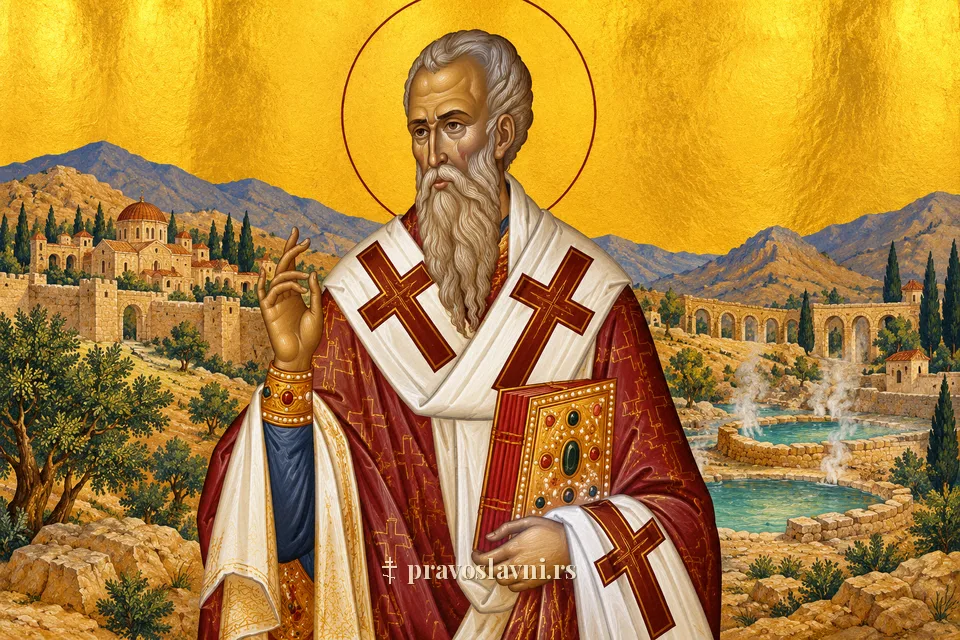
Hieromartyr Patrick of Prusa
What happenedSt Patrick, Bishop of Prusa, was thrown into the boiling water of the hot springs and remained unharmed, and then he was executed together with three presbyters.
Read the LifeOrthodox Calendar · 19 May according to the Julian calendar
Tuesday, 1 June 202719 May (according to the Julian calendar)What happenedSt Patrick, Bishop of Prusa, was thrown into the boiling water of the hot springs and remained unharmed, and then he was executed together with three presbyters.
Read the Life
You may eat meat, eggs, milk and dairy products, as well as any other food — but try to be moderate.
More about the fast →
Today the Church keeps the commemoration of a saint · not a Red Letter day.
More about the feast →
“All things were made through Him, and without Him nothing was made that was made.”
— Jn 1:3St Patrick, Bishop of Prusa, suffered, according to the Prologue, in the time of Emperor Julian the Apostate, together with three presbyters: Acacius, Menander and Polyaenus. His Life says that he preached Christ openly and converted many idol-worshippers, and so the pagans seized him and handed him over to the governor.
The governor took the chained prisoners to the hot springs, where, according to the Life, he offered sacrifices to Asclepius and to the goddess Soteria and demanded that the bishop should bow down to them too. To the governor's question about the hot waters the bishop answered that Christ had created them, and that the idols which the governor worshipped were demons. According to his Life, he also spoke about the underground fire that heats the springs and about hell as the eternal torment of the godless.
When asked whether Christ would save him if he were thrown into the boiling water, he answered that he gave himself over to the will of God. He was thrown into the water and remained unharmed, glorifying Christ, while the drops scalded many of those who were standing around him. The enraged governor ordered that the bishop and the presbyters should be put to death. Before their death they prayed, and the Life records Patrick's words: “Lord Jesus Christ, help me, Thy servant!”
The Life sees all four of them in the glory of the saints, and Patrick as a victor whom Christ has crowned. His example teaches that a confessor of Christ does not seek his own life, but the will of God.
St Patrick was Bishop of Prusa. The Prologue calls it Prusa in Asia, while his Life places that city in Bithynia. The Prologue records that he suffered in the time of the Emperor Julian the Apostate. According to his Life, he openly preached faith in Christ and converted many idol-worshippers. For this reason the pagans seized him, together with three presbyters, Acacius, Menander and Polyaenus, and handed them over to the governor.
The governor took them with him, in chains, to the hot springs; the Life says that they were in iron fetters. There, according to the Life, he bathed for the sake of his health and offered sacrifices to Asclepius and to the goddess Soteria. He offered to free the bishop from his chains and from torture if he would bow down to Asclepius and offer sacrifice.
When the governor asked him about the hot waters, Patrick answered that those waters were not the work of idols: Christ created them, and the gods whom the governor worshipped were nothing but demons. According to the Life, he said to him: “It is not fables but the truth that I have to tell you.” He explained that the springs are heated by fire beneath the earth and spoke of hell under the earth as the eternal torment of the godless, and as an example he pointed to the fire of Sicily. According to the Life, he preached Christ before the people as the Creator of all things, quoting Holy Scripture and the Apostle Paul.
The governor asked him whether Christ would save him if they threw him into boiling water. Patrick answered that he relied on the will of God. The Life explains this answer: he knew that Christ was able to save him, but he longed to be set free from this life and to be with Christ, yet only in the way that God wills.
He was thrown into the scalding water and remained unharmed, glorifying Christ. For those who were watching it was not so: many of them, both sources say, were burned by drops of the boiling water, which according to the Life were hotter than sparks of fire.
The enraged governor, who, according to the Prologue, was seized with anger out of shame, ordered them to be put to death. Before their death they prayed, and the Life records Patrick's prayer: “Lord Jesus Christ, help me, Your servant!” So the bishop and the three presbyters were put to death. The Life says that Christ led them all together into the glory of the saints, and crowned Patrick as a victor.
St Patrick confessed Christ as the Creator before his persecutor. God visibly preserved him in the boiling water, yet he did not ask to live at any price, but that the will of God should be done.